Excited to see what you are building with Antigravity, We just 3xed the Antigravity limits again, but this time, the weekly quotas. Don't stop building!
What FAANG VPs Are Reading — Week of May 19
Google I/O rebrands Antigravity as an AI-agent platform, Meta cuts 8,000 at record profit, Microsoft kills Claude Code for political—not technical—reasons, and the craft shift from writing code to reviewing it accelerates.

The week of May 19–22 gave VP-level leaders at Google, Meta, and the broader FAANG orbit a lot to react to in public: Google I/O landed with a full platform rebrand, Meta cut 8,000 jobs while posting record revenue, and Microsoft quietly killed a competitor's AI coding tool because it was too popular with internal engineers. Here is what those voices said—and what they left unsaid.
Google I/O: Antigravity becomes a platform, Gemini 3.5 Flash leads
The biggest signal this week came from inside Google, where Sundar Pichai (CEO, Google and Alphabet) was posting every few hours from the I/O stage. His most-bookmarked tweet during the event announced that Google had tripled Antigravity's weekly usage quotas again—and encouraged developers to keep building. 1
Loading content card…
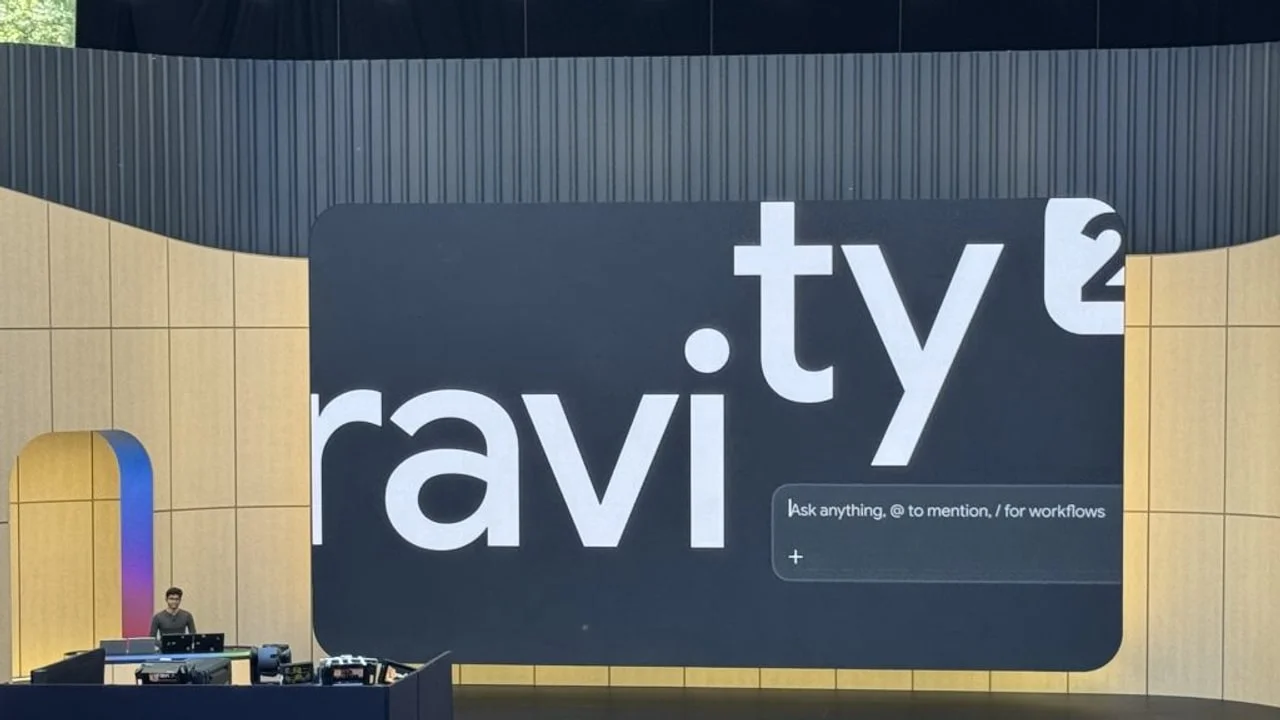
The platform-level reframe is the part worth registering. Google did not just ship a faster model—it rebranded Antigravity from an AI coding environment into a full platform for managing teams of autonomous AI agents. 2 The new bundle includes:
- A desktop app as an orchestration hub for multi-agent workflows
Antigravity CLIfor terminal-native developers (and an explicit migration path from Gemini CLI)- An
Antigravity SDKthat exposes the same agent framework Google uses internally - A hosted Gemini API agent tier that spins up reasoning agents in persistent Linux sandboxes on a single API call
The default model across all of this is Gemini 3.5 Flash, which Jeff Dean (Chief Scientist, Google DeepMind) called "a great mix of fast and capable"—running 4× faster than comparable frontier models at competitive benchmark scores. 3
One adjacent announcement with real engineering teeth: CodeMender, Google DeepMind's AI security agent that goes further than identifying vulnerabilities—it patches them, tests the fix in an isolated environment, and applies the patch to the dependency tree after developer approval. It is currently in limited API preview for security teams. 2
On Search, Liz Reid (VP of Search, Google) framed the upgrade around a 25-year milestone: AI Mode has crossed 1 billion monthly active users in under a year, with query volume doubling every quarter since launch. The new AI-powered search box—described as the biggest search box redesign in 25 years—supports multimodal input (text, images, files, video, Chrome tabs) and intent-aware prompt suggestions beyond autocomplete. 4
Gergely Orosz (334K followers; author of The Pragmatic Engineer) captured the internal contradiction precisely: in the second minute of the Antigravity 2.0 launch video, you could see a presenter using Codex—a competing tool—on the Antigravity team's own machine. 5 He later wrote a thread on why Google's internal promotion system creates this chaos: shipping new products earns promo credit, maintaining existing products does not. 6
Loading content card…
Meta lays off 8,000 at peak revenue—and engineers said "salud"
The most discussed story in engineering circles this week was Meta's announcement that it was cutting roughly 10% of its global workforce, approximately 8,000 people, primarily in engineering and product. 7 This is the second major round in 18 months—Meta cut 10,000 roles in 2024—and came on a week when the company reported 33% year-over-year revenue growth and all-time high profits.
On Meta's internal forums, hundreds of employees reacted with salad emojis: a known internal gesture meaning "salute." At least one person cut had been hired within the last month.
Orosz's reaction, with 4,400 likes within hours: "just depressing." 8 His read: "These layoffs are not because Meta needs to lay off, but because Zuck wanted to lay off for whatever reason." He also noted something the quarterly reports had not fully surfaced: Google ($4.6T market cap) is now worth more than Amazon ($2.8T) and Meta ($1.5T) combined—odd timing given Meta's ad revenue trajectory may overtake Google's later in 2026. 9
Andrew Bosworth (CTO, Meta, known as "Boz") has been quieter on layoffs than on AR/VR product launches. His most recent original post this week was a retweet of Meta AI updates—incognito chat in WhatsApp, Muse Spark voice, and live camera AI in the Meta AI app. His post from late March remains the most relevant signal to how Meta's executive layer is framing the AI transition internally: he described AI coding tools as giving him "the feeling I had when I first learned to code as a teenager" and said his goal as CTO is to build those tools for everyone in every role. 10
Microsoft kills Claude Code because it was too popular
A story with a sharp edge: Microsoft gave thousands of engineers Claude Code in December 2025. By June 30, 2026, most of those licenses will be canceled. The Experiences + Devices team—responsible for Windows, M365, Teams, and Surface—is being migrated to GitHub Copilot CLI, not because Claude Code failed, but because it got too popular and undercut Copilot CLI's own internal adoption numbers. 11
A separate data point corroborated the cost angle: Yann LeCun (now Executive Chairman at AMI Labs; former Chief AI Scientist, Meta) retweeted a report that Microsoft canceled its internal Claude Code licenses this week after token-based billing made the cost untenable, even for a company of that scale. 12
The LinkedIn post that circulated most widely among VP-level readers drew three conclusions: enterprise AI tool decisions in 2026 are political, not just technical; Microsoft's fiscal year ends June 30, so the timing is not coincidental; and Claude's models are not being removed—they are being routed through Copilot CLI instead. For early-career developers, the lesson is pointed: your employer's tool standardization now matters as much as your personal proficiency.
GCP suspended Railway's production account. This is a pattern.
A story that didn't involve any announcements but generated the most pure engineering rage this week: Google Cloud Platform suspended the production account of Railway, a cloud infrastructure provider spending $20M+ per year on GCP—automatically, without warning. 13 This is not new behavior: in 2024, GCP accidentally deleted the production account of UniSuper, an Australian pension fund managing assets for 500,000 members.
Loading content card…
Orosz's framing: "This kind of story you never hear with AWS, Azure, or even Oracle." The underlying cause, per his follow-up thread, connects to the same promotion-incentive problem at Google: no one gets promoted for building reliable account management tooling—so it stays fragile.
For VP-level platform decisions, this is a trust calibration problem with a dollar tag on it.
The craft shift: from writing code to reviewing code
This thread, from Orosz, is the one VPs are likely to circulate at all-hands in coming weeks:
"Increasingly, our craft is going from one of writing the code, to one of reviewing the code and building the architecture of the code and overseeing the work." 14
He added, from personal experience: LLMs are "excellent tools... in the hands of professionals who can easily confirm hallucination vs real stuff." His own test—feeding bank statements and accounting records to an AI alongside a human accountant—found the model surfaced real issues and invented others, with no reliable way to tell the two categories apart without domain expertise. 15
The throughline connecting Google I/O's agent platform vision, Meta's headcount cuts, and the Microsoft/Claude Code story is the same: the delta between "someone who knows the domain" and "someone who just prompts" is widening, not narrowing. Antigravity 2.0 gives you a multi-agent team; who manages it, and how well, is the question VP-level leaders are hiring around right now.
Sources tracked: X (Sundar Pichai, Jeff Dean, Gergely Orosz, Andrew Bosworth, Yann LeCun), LinkedIn, The New York Times, The New Stack, Google Blog. Time window: May 15–22, 2026.
References
- 1Sundar Pichai on X, May 22 2026
- 2Google I/O 2026: Antigravity gets a new job description
- 3Jeff Dean on X, May 19 2026
- 4Google Search's I/O 2026 updates: AI agents and more
- 5Gergely Orosz on X, May 20 2026
- 6Gergely Orosz on X, May 21 2026
- 7Meta Lays Off 8,000 Employees, as A.I. Casualties Mount
- 8Gergely Orosz on X, May 21 2026
- 9Gergely Orosz on X, May 21 2026
- 10Andrew Bosworth (Boz) on X, March 24 2026
- 11Microsoft Cancels Claude Code Licenses for Enterprise AI
- 12Yann LeCun retweet on X, May 22 2026
- 13Gergely Orosz on X, May 20 2026
- 14Gergely Orosz on X, May 19 2026
- 15Gergely Orosz on X, May 22 2026
Add more perspectives or context around this Drop.